
Naimisharanya, also known as Neemsar or Naimish Dham, is one of the most sacred pilgrimage destinations in Hinduism. Located on the banks of the Gomati River in Sitapur district of Uttar Pradesh, this ancient spiritual land is deeply connected with Hindu mythology and finds mention in scriptures such as the Mahabharata and various Puranas. According to Hindu tradition, Naimisharanya is associated with Lord Brahma, Lord Vishnu, Lord Shiva, and Goddess Sati, and is believed to be the divine abode of 33 crore deities.
The significance of Naimisharanya extends far beyond its temples and sacred ponds. It is believed that 88,000 sages performed penance here, earning the place the title of Tapobhumi (the land of penance). Local traditions also associate the site with Maharishi Ved Vyasa, who is believed to have composed the Mahabharata and the 18 Puranas at Vyas Gaddi. Another popular belief states that after the Mahabharata war, the Pandavas visited Naimisharanya to perform a yajna and seek purification.
At the heart of Naimisharanya lies the sacred Chakra Tirth, where devotees gather for a holy dip. Many pilgrims believe that visiting the Char Dhams and then bathing in Chakra Tirth completes their spiritual journey. Today, people from across India visit Naimisharanya to experience its unique blend of mythology, devotion, and tranquility. During my recent visit to Neemsar, I explored some of its most important temples, kunds, and spiritual landmarks. In this blog, I’m sharing everything you need to know for your trip to Naimisharanya.
Tourist Attractions in Naimisharanya
1. Chakra Tirtha
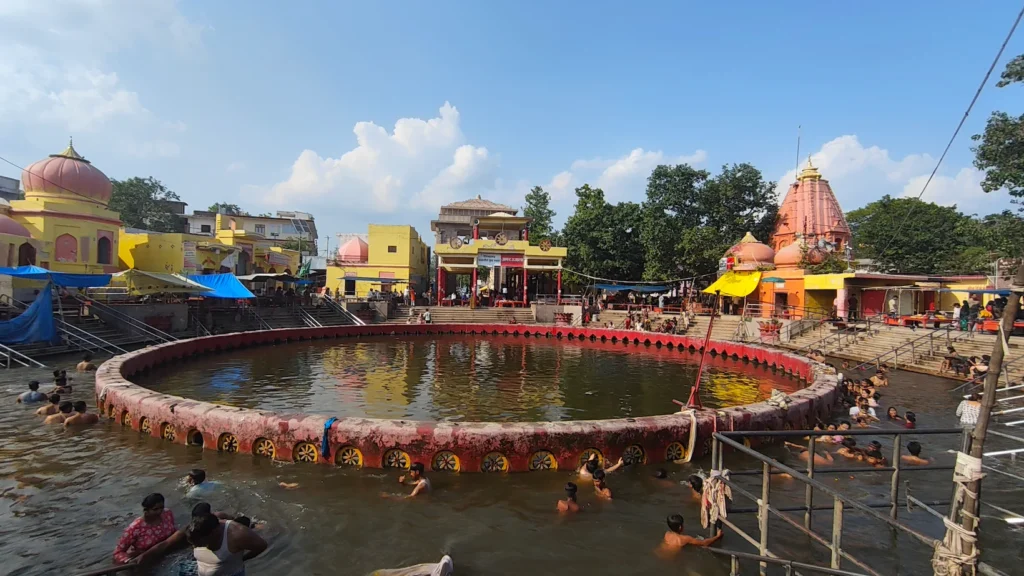
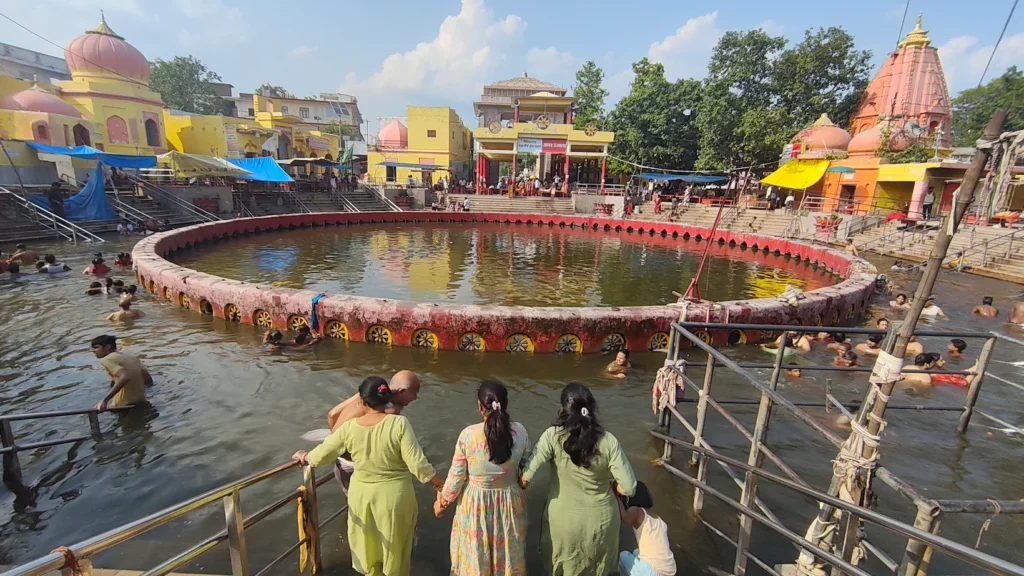
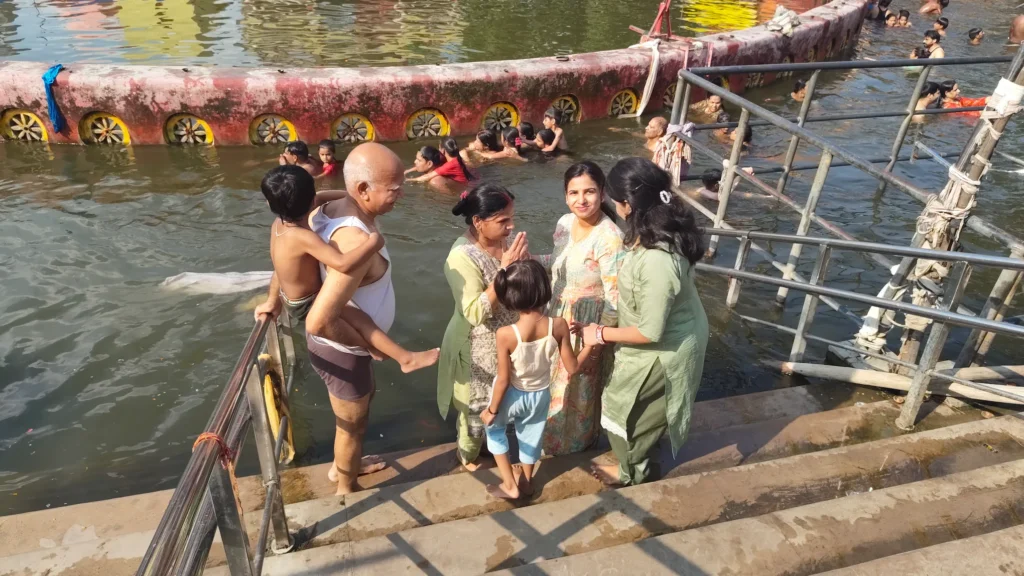
Chakra Tirtha is the most sacred attraction in Naimisharanya and is considered the spiritual center of the entire pilgrimage town. According to Hindu mythology, Lord Vishnu’s Sudarshan Chakra fell at this spot, creating a circular water body where water flows continuously from the earth. People believe that circling around the Chakra Kund cleanses sins and brings spiritual blessings. This holy significance attracts thousands of devotees. Pilgrims typically come here first, take a holy dip, and then visit other temples. Many people also perform shanti path (peace prayers) for their loved ones here. On Amavasya (new moon day), when the moon is completely invisible, a large number of people gather to take a dip in the holy Chakra Kunda.
2. Lalita Devi Temple
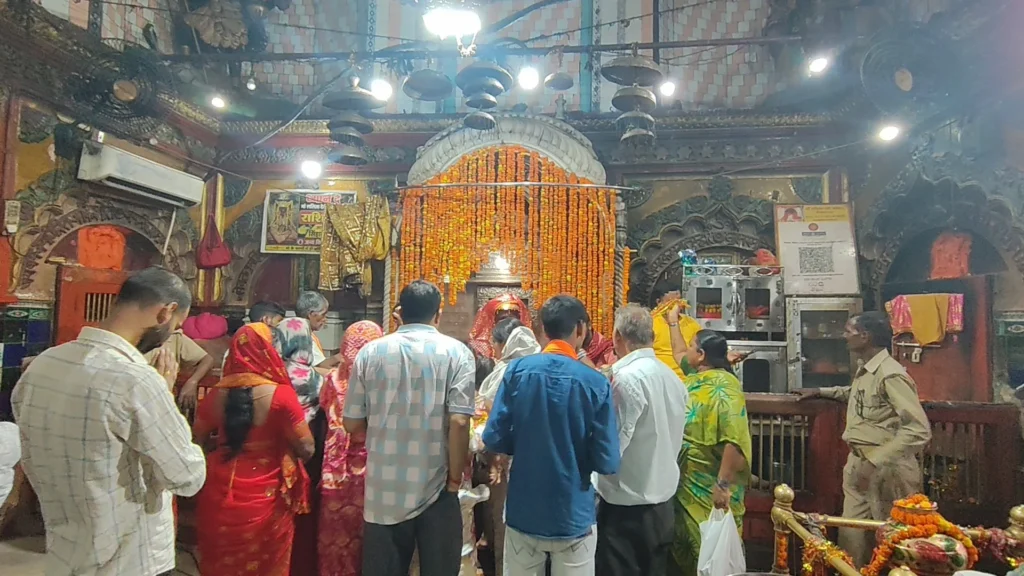
After taking a dip in the holy Chakra Tirtha, people visit the Lalita Devi Mandir. The Lalita Devi Temple is among the most important temples in Naimisharanya and is considered one of the 51 revered Shakti Peethas. Dedicated to Goddess Lalita Devi, the temple attracts devotees from across the country who come to seek blessings and offer prayers. At the temple courtyard (mandir prangan), people sit, relax, and offer kirtans (devotional songs).
3. Shri Naimishnath Vishnu Temple
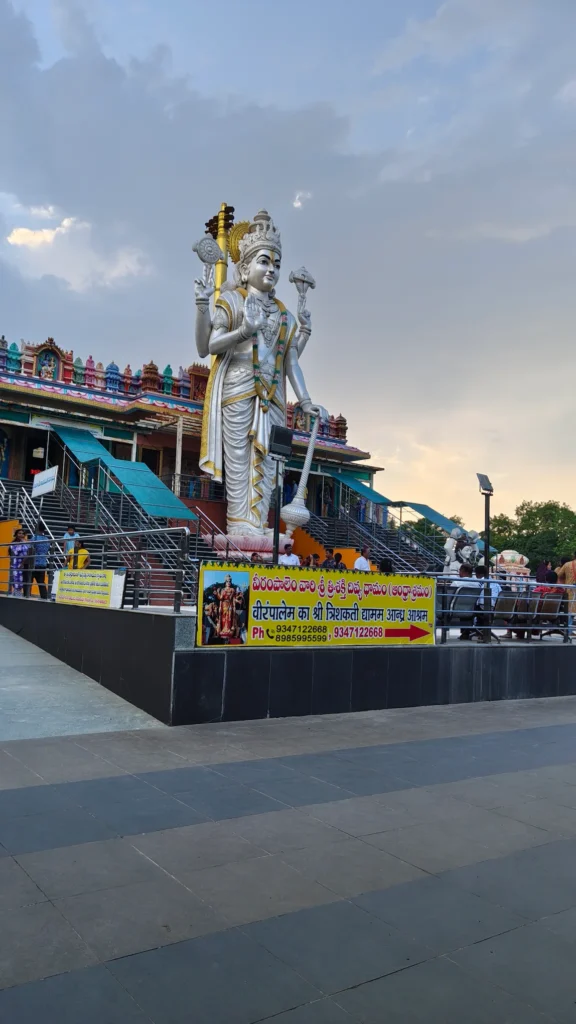
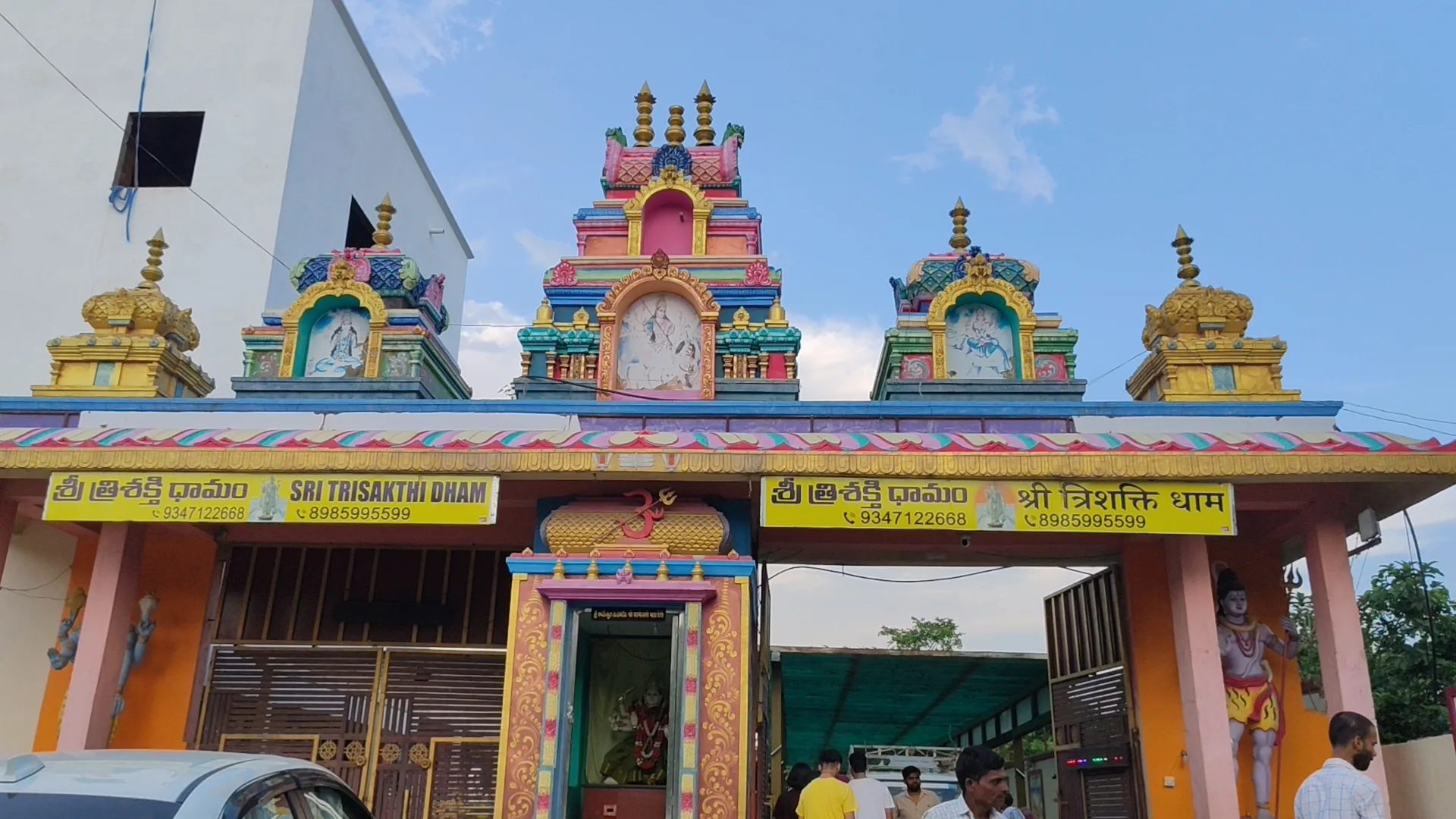
After visiting Lalita Devi Temple, pilgrims head to The Shri Naimishnath Vishnu Temple, also called Trishakti Dham, Naimishnath Devaraja Temple, Naimishnarayan Temple, or Ramanuj Kot Temple. It is a Hindu temple dedicated to Lord Vishnu and Goddess Lakshmi, and it is one of the most important religious landmarks in Naimisharanya.
You will see a giant, beautiful white idol of Lord Vishnu at the center of the temple. On either side, stairs lead to the temple of Goddess Durga, with a row of many smaller temples built within this complex. The temple receives a steady stream of pilgrims throughout the year, especially from South India.
The Namishnath Vishnu Temple is constructed in South Indian architectural style with a Gopuram outside, while exhibiting North Indian architectural features inside. It boasts a golden Garuda Stambh facing Lord Vishnu in the garbhagriha (sanctum sanctorum), with the Garuda murti engraved on it. It has a small Sabha Mandap connected to the garbhagriha. The main garbhagriha of Lord Vishnu, made of black stone, depicts Him in standing posture facing the Garuda Stambh. There are also chal (utsava/festival) vigrahas of Lord Vishnu with Sridevi and Bhudevi standing beside Him, made of Panchaloha (five metals).
I personally love this place—the temple is very clean and well-maintained. The atmosphere here is pleasant, calm, and perfect for meditation.
There is also a building where tourists from South India can stay.
4. Gomti River
The sacred Gomti River is just 300 meters away from the Naimishnath Vishnu Temple—visit it after going to the temple. The river is mentioned in several Hindu texts and is considered holy by devotees. This place has a small ghat where you can take a dip in the holy water and participate in the evening aarti. If you’re lucky, you can enjoy a boat ride there. You can also enjoy tea and snacks at the corner of the river complex. This whole region is packed with natural beauty and has fewer crowds.
Note: This place is underdeveloped—it’s not very clean, and I didn’t find any functional bathroom there.
5. Hanuman Garhi Temple and Pandav Kila
After visiting the Gomti River, your next stop should be Hanuman Garhi Temple. On the way to Hanuman Garhi Temple, there is Pandav Kila, which is associated with the Pandavas of the Mahabharata. According to local traditions, the Pandavas visited Naimisharanya after the Kurukshetra war and performed rituals here. There are idols of the Pandavas here; this is not a big temple.
Just 30 meters away is Hanuman Garhi Temple, one of the most visited temples in Naimisharanya. Dedicated to Lord Hanuman, its significance related to the Ramayana attracts devotees seeking strength, protection, and blessings. The temple remains busy throughout the day with visitors offering prayers and reciting the Hanuman Chalisa. Its peaceful surroundings make it a must-visit stop during a Naimisharanya pilgrimage. Around 7 PM, you can participate in the sandhya aarti, and people can visit this temple anytime and any day.
⚠️ Caution: Be aware of the priests (pujaris) here—they may insist on donations, especially if you’re coming from other states. Personally, I didn’t find this place very pleasant. A priest misbehaved with my family, and when large crowds gather, they don’t manage things well.
6. Sri Khatu Shyam Mandir
There is a Khatu Shyam Temple near Hanuman Garhi, just 20 meters from Pandav Kila. There is a beautiful idol of Khatu Shyam Baba here. In the evening, people come to listen to katha (spiritual discourses) and enjoy the prasad.
7. Vyasa Gaddi
After visiting these places, you can head to Vyasa Gaddi, which is 3 km away from Hanuman Garhi Temple. Vyasa Gaddi holds immense importance in Hindu tradition as it is believed to be the place where Maharishi Ved Vyasa composed and narrated the Mahabharata and several Puranas. The site serves as a reminder of India’s rich spiritual and literary heritage. Visitors often spend time here reflecting on the teachings and wisdom associated with the great sage.
8. Balaji Temple
The Balaji Temple is a popular place of worship dedicated to Lord Venkateswara, a form of Lord Vishnu. The temple’s beautiful architecture and peaceful surroundings attract both pilgrims and tourists. Many devotees visit to seek prosperity, happiness, and divine blessings.
9. Dadhichi Kund
Dadhichi Kund is linked to the legendary sage Maharishi Dadhichi, who is revered for sacrificing his bones for the welfare of the gods. According to Hindu mythology, his sacrifice enabled the creation of Lord Indra’s powerful weapon, the Vajra. The kund stands as a symbol of selflessness, courage, and devotion.
10. Panch Prayag
Panch Prayag is considered a sacred confluence point within Naimisharanya and holds special religious significance for devotees. Pilgrims visit the site to perform rituals and prayers, believing it to be spiritually auspicious. The peaceful surroundings provide a perfect setting for meditation and reflection.
11. Dashashwamedha Ghat
Dashashwamedha Ghat is one of the important religious ghats in Naimisharanya. The ghat serves as a place for ritual bathing, prayers, and spiritual ceremonies. Early mornings and evenings offer a particularly serene atmosphere, with devotees gathering to worship and perform traditional rituals.
12. Nardanand Saraswati Ashram
Nardanand Saraswati Ashram provides a tranquil environment for spiritual seekers. Surrounded by peaceful surroundings, the ashram serves as a place for meditation, prayer, and self-reflection. Visitors looking for a quiet retreat from the crowds often find comfort and inspiration here.
13. Puran Mandir & Ashram of Ma Anandamayi
Dedicated to the teachings of the revered spiritual leader Ma Anandamayi, this ashram offers a calm and devotional atmosphere. The peaceful surroundings make it an ideal place for meditation and contemplation. Many visitors stop here to experience the simplicity and spiritual energy associated with the ashram.
14. Sita Kund
Sita Kund is a sacred water tank associated with Goddess Sita. According to local beliefs, the site holds deep spiritual significance and attracts devotees throughout the year. The calm surroundings and religious importance make it a popular stop among pilgrims visiting Naimisharanya.
15. Soot Gaddi
Soot Gaddi is believed to be the place where Sage Suta narrated the Puranas to thousands of sages gathered in Naimisharanya. The site occupies a special place in Hindu tradition and symbolizes the transmission of sacred knowledge. Visitors interested in mythology and religious history often include it in their itinerary.
16. Naimisharanya Forest
Ancient scriptures describe Naimisharanya as a dense sacred forest where thousands of sages performed penance and spiritual practices. While much of the original forest no longer exists, visitors can still experience the serene environment that reflects the area’s spiritual heritage. The forest remains a symbol of meditation, learning, and devotion.